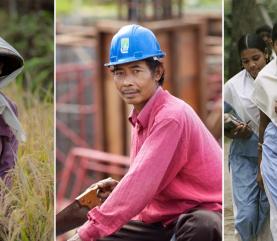
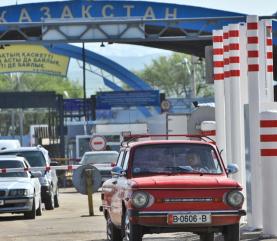
Inadequate road connectivity had hampered the economic growth of rural India in the years prior to this program. To address the challenge, the government launched the Prime Minister’s Rural Roads Program (PMGSY) in 2000. The national program intended to upgrade about 738,000 kilometers (km) of rural roads to an all-weather standard at a total estimated cost of about $30 billion.
The government of the People’s Republic of China (PRC) recognizes that the dominant use of fossil fuel to produce energy is neither environmentally sustainable nor economically desirable.
Afghanistan’s power generation, transmission, and distribution systems had been severely damaged by years of conflict, and by 2006, there was almost no transmission grid and generation was limited. The lack of generation capacity led to widespread load shedding throughout the country, with supply available for only a few hours a day.
To cope with the dramatic growth in traffic demand, the government of the People’s Republic of China (PRC) formulated in 1988 a long-term strategy to implement a 35,000 kilometer (km) national trunk highway system. By 2004, this strategy had further evolved into a plan for a national expressway network with a total length of 85,000 km and which was targeted for completion by 2020.
Sichuan province in southwest People’s Republic of China (PRC) is in a basin and surrounded by mountains. Most of its population is on the flat, fertile plains in the central and eastern areas. Its landlocked nature has gradually eased with the ongoing development of transport infrastructure on the Yangtze River, railway lines, and several major highway corridors.
Evaluation-Lessons.org uses cookies to improve your user experience. To learn more, click here to view our cookie policy. By clicking on OK or continuing to use the site, you agree that we can place these cookies.